

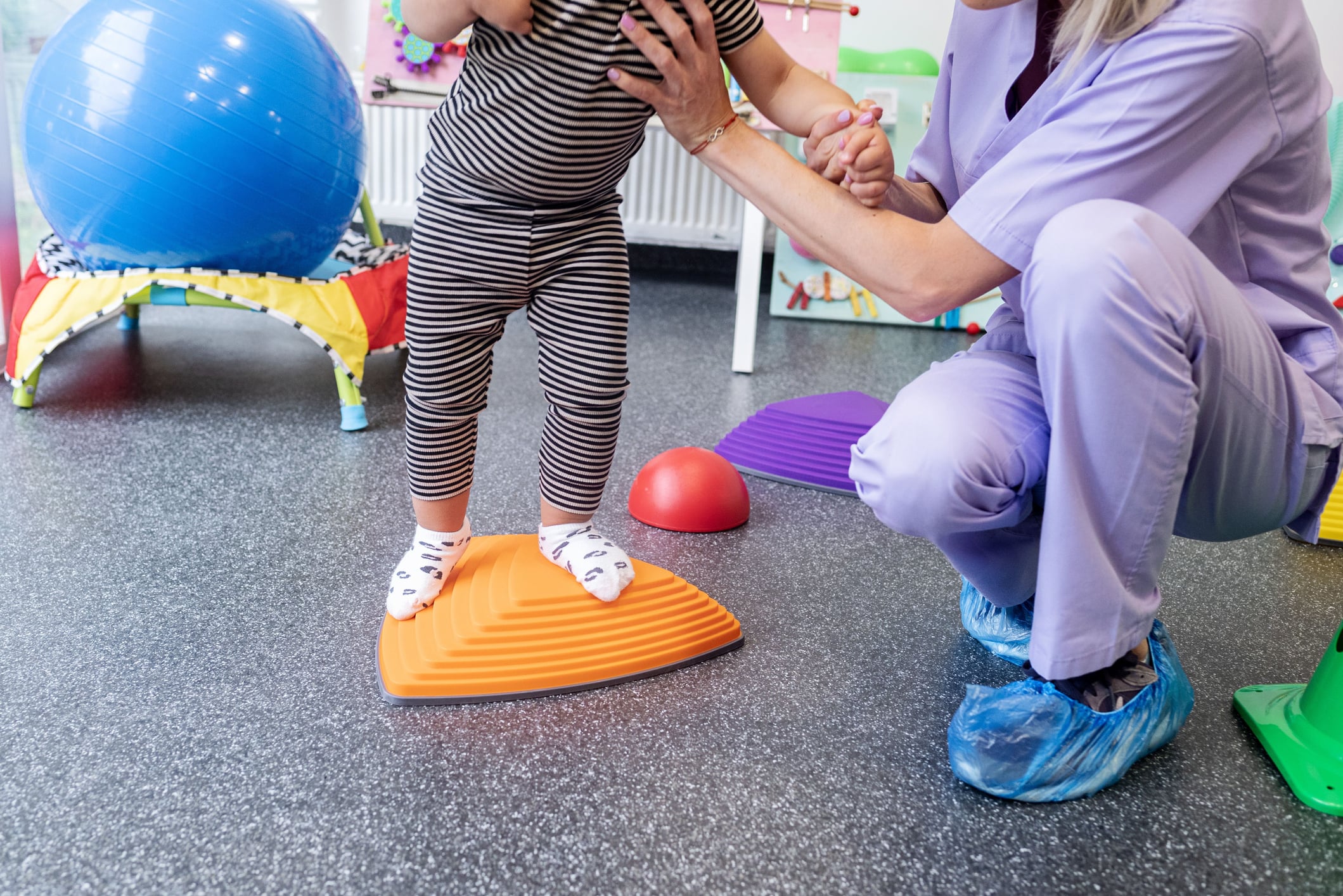
When you think about balance and coordination, you might picture your child riding a bike, playing sports, or walking across a balance beam. But these skills are involved in many, many more physical activities. Your child uses balance and coordination throughout the day to get dressed, climb stairs, play with friends, participate at school, and complete tons of other everyday tasks.
When these skills are challenging, the effects can sometimes show up in unexpected ways. Understanding how balance and coordination support your child’s development can help you recognize when they may need a little extra support.
What Are Balance and Coordination?
Balance is your child’s ability to control and maintain their body position while sitting, standing, or moving. It helps them stay upright when they walk across uneven ground, bend down to pick something up, or stand on one foot to put on a pair of pants.
Coordination is the ability to use different parts of the body together smoothly and effectively. Children rely on coordination when they run, catch a ball, climb playground equipment, use utensils, write, or complete other tasks that require several movements to work together.
Balance and coordination are closely connected. Together, they help children move confidently and safely through their environment while participating in the activities that make up their day.
Balance and Coordination Affect Everyday Activities
Strong balance and coordination skills make it easier for children to participate independently in many daily routines.
For example, getting dressed requires your child to maintain their balance while moving their arms and legs into clothing. Even sitting upright at a desk requires postural control so your child can focus on other tasks without using extra energy simply to keep their body stable.
Your child also uses these skills during activities such as:
- Getting in and out of a car
- Navigating curbs, stairs, and uneven surfaces
- Playing on playground equipment
- Sitting at the dinner table
- Carrying objects while walking
- Completing self-care activities
Signs Your Child May Have Difficulty with Balance or Coordination
Children develop motor skills at different rates, and an occasional fall or awkward movement is a normal part of growing up. However, you may notice patterns that suggest your child is having more difficulty with balance or coordination.
When these skills are difficult, activities that seem simple can require much more effort. Your child may:
- Trip, fall, or bump into things frequently
- Have difficulty going up or down stairs
- Avoid playground equipment or physical activities
- Struggle to catch, throw, or kick a ball
- Move cautiously or appear unsure during physical activities
- Have trouble standing on one foot
- Tire easily during active play
- Struggle to keep up with other children during games or sports
Some children may also become frustrated or avoid activities they find difficult. What looks like a lack of interest in sports, playground games, or other physical activities may sometimes be a child trying to avoid something that feels especially challenging.
Why These Skills Matter for Confidence and Independence
Balance and coordination don’t only affect how well a child performs physical tasks. They can also influence how confidently they participate in everyday life.
Children naturally learn through movement and play. Running around the playground, joining a game of tag, learning to ride a bike, or helping with daily routines all provide opportunities to practice new skills and become more independent.
If movement feels difficult or unpredictable, a child may be less willing to try unfamiliar activities or participate with peers. Over time, building stronger motor skills can help children feel more comfortable exploring their environment and participating in activities they enjoy.
Simple Ways to Practice Balance and Coordination at Home
Many fun, everyday activities give children opportunities to practice these skills without making it feel like work. Depending on your child’s age and abilities, you can try:
- Walking along a line made with painter’s tape
- Playing catch with different-sized balls
- Creating simple obstacle courses
- Playing hopscotch
- Practicing standing on one foot
- Dancing to favorite songs
- Playing games that involve jumping or hopping
- Visiting the playground to climb, swing, and explore
Keep activities playful and appropriate for your child’s abilities. The goal is to give them opportunities to practice movement while building confidence, not to pressure them to perform a skill perfectly.
When to Reach Out for Support
Every child develops at their own pace, but if difficulties with balance or coordination are making everyday activities harder, causing frequent falls, or keeping your child from participating in activities they enjoy, it may be helpful to seek guidance.
At Tender Ones Therapy Services, our pediatric therapists help children build the strength, balance, coordination, and motor skills they need to participate more confidently and independently in daily life. Contact our team today to schedule an evaluation and learn how we can support your child’s development.