

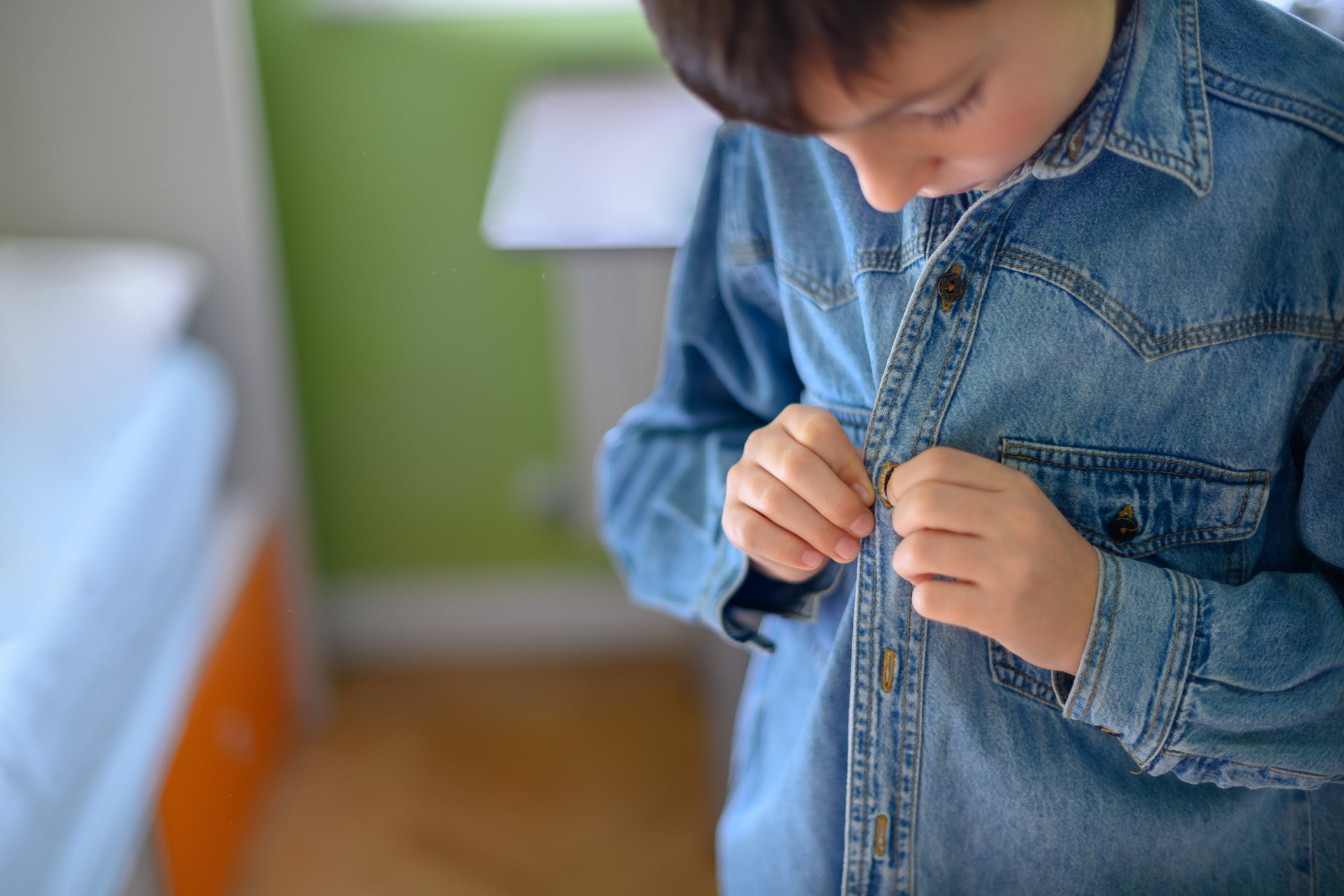
Mornings are a busy time for families, and getting out the door on time is the goal. So when your child struggles with their coat zipper or gets upset when they can’t get their shirt buttons to line up, it’s natural to step in and do it yourself. You want to encourage their independence, but there are buses to catch and no time to waste.
For many kids, getting dressed on their own takes extra practice. Understanding what makes it tricky can help you support your child with more patience and less stress while helping them feel proud of what they can do on their own.
Why Dressing Tasks Can Be Difficult for Your Child
For adults, getting dressed often happens on autopilot. For your child, it takes precise hand and finger movements, both hands working together, and knowing how to move their body into clothing. When these skills are still developing, tasks like buttoning a shirt or pulling on pants can take extra effort.
Buttoning a Shirt
Buttoning relies on fine motor skills, including finger control and the hand strength to push a button through a snug hole. It also takes bilateral coordination, or using both hands together, since one hand holds the fabric while the other works the button. While these skills are developing, your child may feel like they’re trying to button a shirt while wearing thick winter gloves.
Mastering Zippers
Zippers depend on eye-hand coordination, or using the eyes to guide the hands. Your child has to look down, fit two small pieces together, and hold the bottom steady while pulling up. If the pieces keep slipping apart, it can be frustrating.
Fastening Snaps and Tying Shoelaces
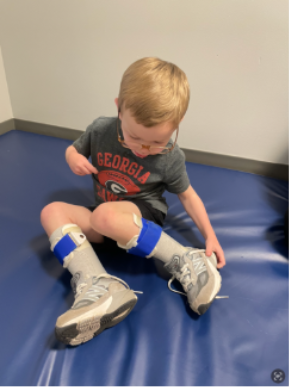
Snaps require your child to line up two pieces and press them together firmly, which takes hand strength and control. Shoelaces combine finger control, both hands working as a team, and remembering steps in order. Your child may cross the laces but still need help making the loops.
Pulling On Clothes
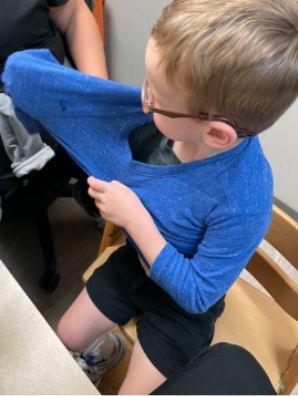
Even clothing without fasteners takes coordination. Body awareness, or knowing where their arms and legs are without looking, helps your child guide an arm through a sleeve. Motor planning, or figuring out how to move their body to complete a task, helps them work out how to pull a shirt over their head and get their arms through. Remembering that pants go on before shoes also requires following steps in order.
Being Sensitive to Fabrics
Sometimes the difficulty comes from how clothing feels. If your child is especially sensitive to touch, stiff denim, scratchy tags, or seams can feel truly uncomfortable, like wearing an itchy sweater all day. Your child may resist getting dressed even when they have the skills to put their clothes on.
Simple Ways to Make Dressing Easier at Home
A few small changes can make dressing more manageable while your child builds their skills:
- Practicing off the body first. Place a shirt or jacket in your child’s lap or on a table so they can see what their fingers are doing.
- Starting with simpler clothing. Pull-on pants and loose shirts are easier than clothing with fasteners, and large buttons are easier than small ones. Let your child build confidence with these first.
- Making fasteners easier to grab. Choose easy-to-grip zipper pulls, or attach a short ribbon loop to a zipper pull.
- Letting your child finish the last step. Start the zipper and hold the bottom steady, then let your child pull it up. As they become comfortable, let them take over more steps.
- Using a picture checklist. Pictures showing the order of dressing can help your child follow the routine with fewer reminders.
- Choosing clothing that feels comfortable. Let your child help choose soft fabrics, tagless shirts, or seamless socks based on what feels good against their skin.
Offer enough help to keep practice manageable, and recognize your child’s effort along the way.
Signs Your Child May Need Extra Support With Dressing
Learning a new dressing skill can take time. Still, it may help to talk with a pediatric occupational therapist if your child regularly struggles with dressing or is:
- Avoiding clothing with buttons, zippers, or snaps.
- Becoming upset or giving up quickly when working with fasteners.
- Needing help with dressing tasks even when they want to do them independently.
- Having difficulty getting dressed even with extra time and practice.
- Losing track of steps partway through dressing.
- Strongly resisting certain fabrics, tags, or fitted clothing.
How Occupational Therapy Helps With Dressing Skills
Pediatric occupational therapy helps your child build skills for everyday activities, including getting dressed. Your child’s therapist will identify where they need extra support, then use engaging, play-based activities to help them build those skills.
Depending on your child’s needs, therapy may include:
- Squeezing playdough and pinching clothespins to strengthen the small muscles of the hands and fingers
- Stringing beads or tearing paper to help both hands learn to work together
- Dropping coins into a piggy bank or fitting pegs into a board to practice guiding the hands with the eyes
- Crawling through tunnels and playing games like Simon Says to build body awareness and motor planning
- Exploring clothing fabrics through dress-up play at your child’s pace to help them find textures that feel comfortable
- Practicing dressing one step at a time with familiar clothing to build confidence and independence
Your child’s therapist will show you ways to practice the skills your child learns in therapy so they can continue making progress between sessions.
Reach Out to Tender Ones for Support With Dressing Skills
If your child needs help with dressing skills and you live near Dacula, Gainesville, or Atlanta, GA, Tender Ones Therapy Services can help. Call us at (770) 904-6009 or fill out our online contact form to schedule an evaluation with a pediatric occupational therapist. We look forward to helping your child build confidence and independence, one button at a time.