
Every child with Down syndrome follows a unique path to finding their voice. By understanding common speech and language milestones, you can better navigate this journey alongside your child, helping them build the confidence to express their needs and connect more deeply with the people they love.
How Down Syndrome Affects Communication Development
There are several ways Down syndrome can influence how your child develops speech and language skills. Understanding these developmental differences can help you better understand your child’s communication journey. Some of the most common differences include:
- Having reduced muscle tone in the mouth, tongue, and lips, which makes producing clear sounds more difficult
- Having a smaller mouth and a tendency for the tongue to sit forward, which can affect how sounds are formed
- Experiencing hearing challenges, which can directly impact how your child learns and uses language
- Needing more time to process communications and respond, which can affect how quickly language develops
- Understanding far more language than they can verbally express
Communication Milestones for Children with Down Syndrome
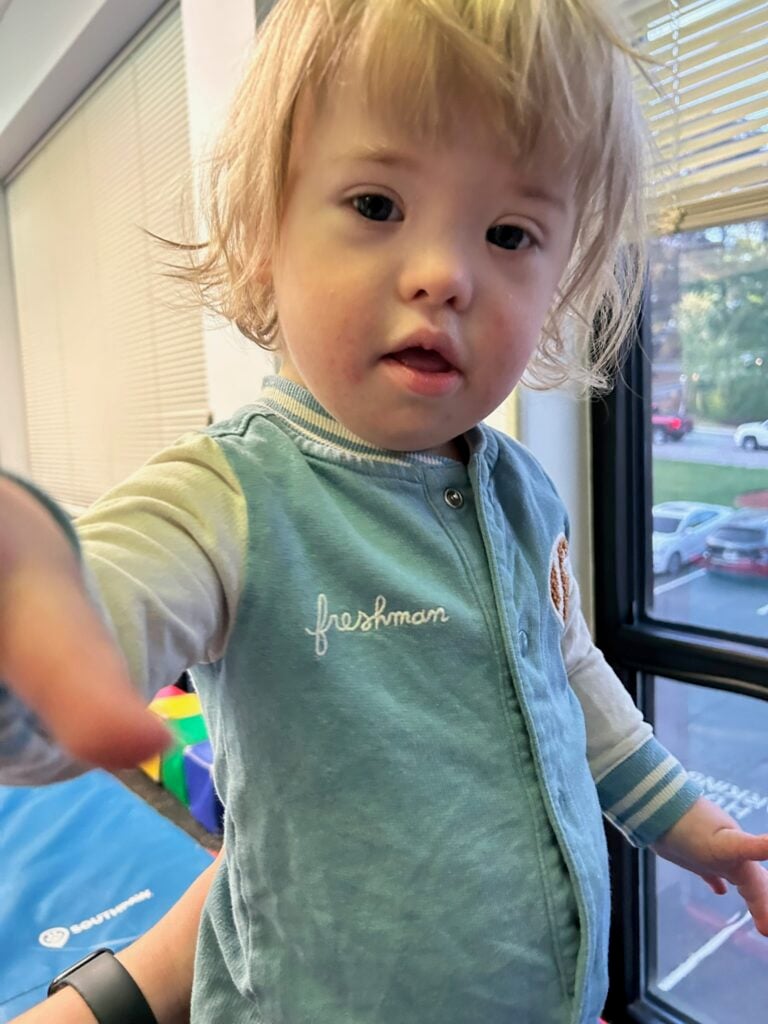
Children with Down syndrome reach communication milestones at their own pace. Communication milestones are general speech and language skills most children develop within a certain age range, such as babbling, using first words, and combining words into short phrases. The milestones below reflect common communication patterns and corresponding age ranges seen in many children with Down syndrome.
Birth to 12 Months
- Making eye contact and responding to familiar faces and voices
- Cooing and babbling
- Using gestures such as reaching, pointing, or waving
- Smiling and showing interest in social interaction
1 to 3 Years
For children with Down syndrome, first words typically emerge between 18 months and 3 years. During this stage, many children are:
- Using single words
- Relying on gestures and pointing to express their needs
- Understanding significantly more than they can say
- Showing clear interest in communicating, even when words don’t come easily
3 to 6 Years
During the preschool years, many children with Down syndrome begin combining words and building vocabulary, though how clearly they speak can still be a challenge. Many children are:
- Putting two words together, such as “more juice” or “daddy go”
- Building vocabulary steadily, especially for familiar people and objects
- Using a mix of speech, gestures, and sometimes pictures to communicate
- Being more easily understood by family members
The Importance of Early Intervention
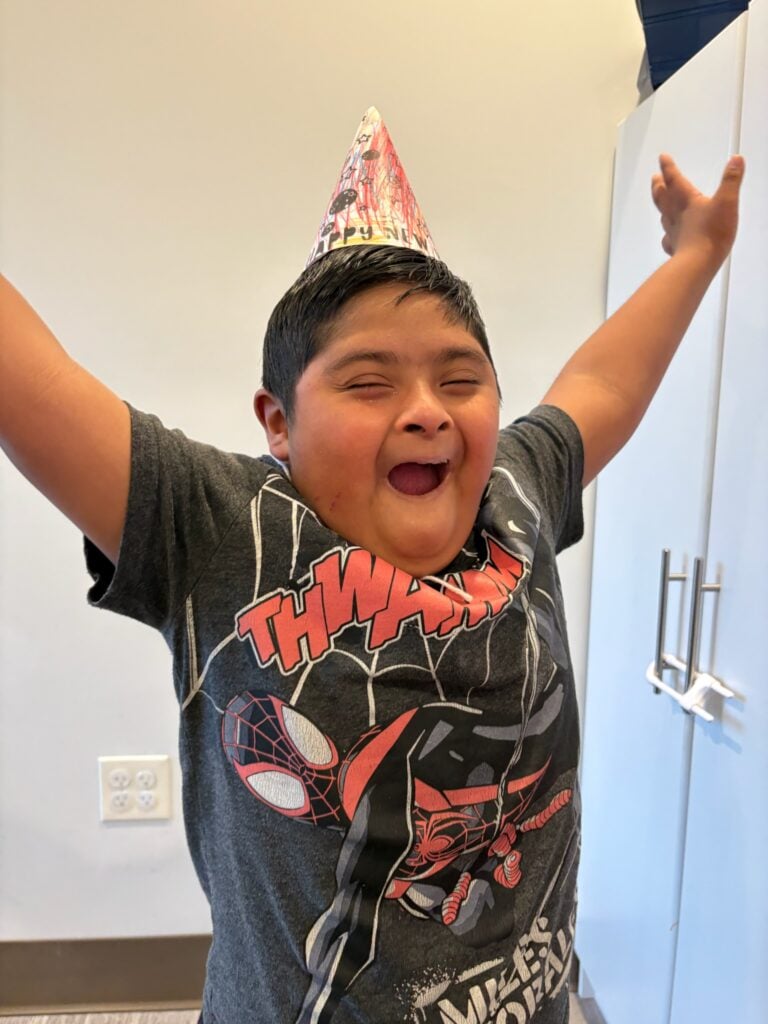
For children with Down syndrome, starting speech therapy early, often in infancy, can make a meaningful difference in how communication develops over time. In the first few years of life, your child’s brain is growing and changing at a rapid pace. This ability to learn and adapt, known as neuroplasticity, makes it easier for young children to develop new speech and language skills.
The sooner your child begins receiving support, the more opportunity they have to establish a strong communication foundation. Early intervention can also help reduce frustration by giving your child more tools for self-expression and helping them feel more heard and understood at home, in school, and on the playground.
How Speech Therapy Helps Children with Down Syndrome
A pediatric speech therapist will evaluate your child’s current communication skills and create a personalized treatment plan based on their unique strengths, interests, and communication needs.
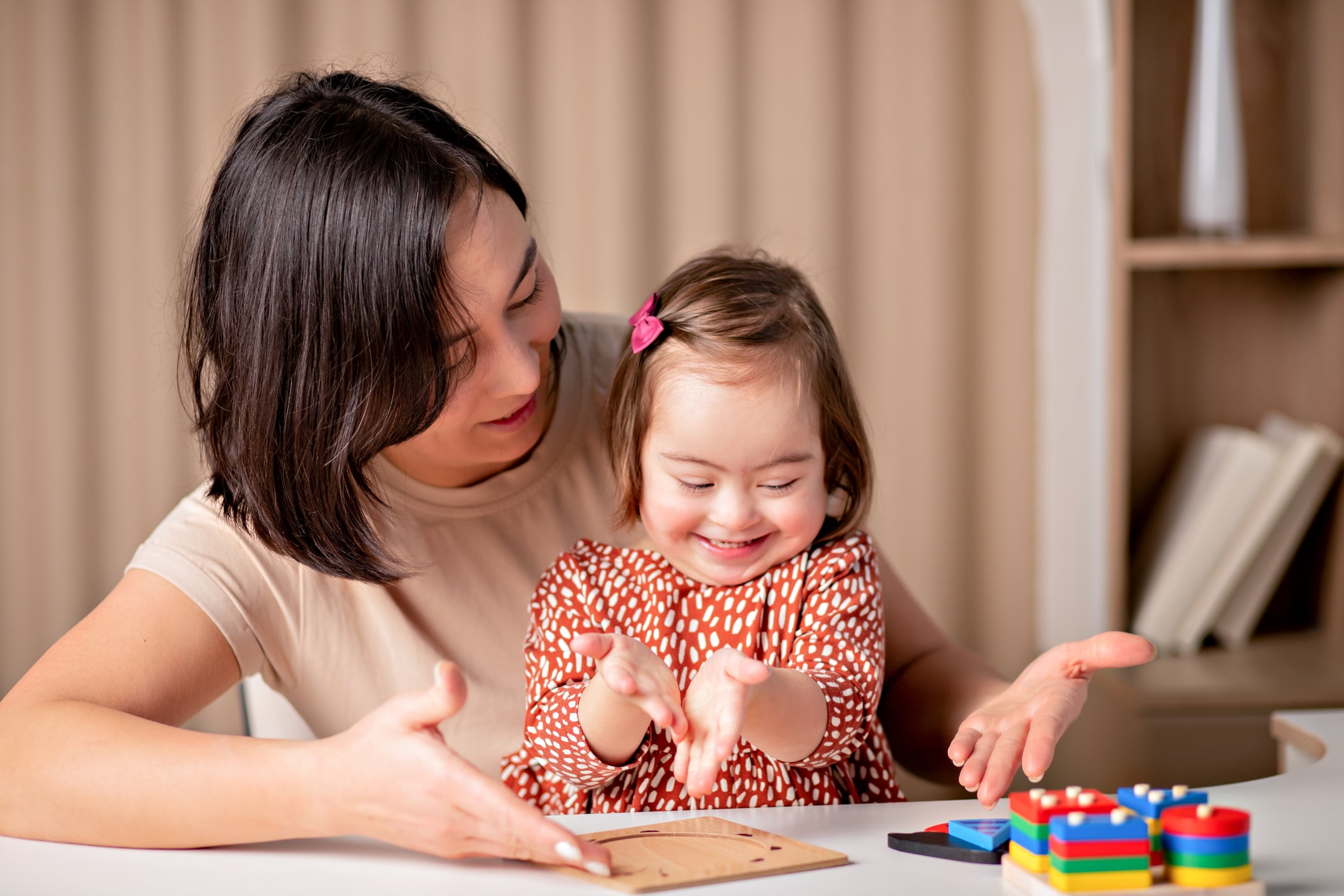
Speech therapy sessions are designed to feel engaging, interactive, and supportive, often using play-based activities, books, games, and everyday routines to encourage communication in ways that feel natural and motivating for your child.
Depending on your child’s age and needs, therapy may include:
- Supporting clearer speech through activities that build mouth strength and coordination
- Developing communication skills such as engaging with others, taking turns, and using gestures
- Expanding vocabulary with words for familiar people, objects, and daily routines
- Combining words and building longer sentences over time
- Practicing speech sounds so your child is better understood by others
- Introducing visual supports, sign language, or speech-generating devices to support spoken language
How to Support Communication at Home
Speech therapy sessions happen once or twice a week, but your child’s communication growth doesn’t stop when they leave the clinic. The strategies your therapist introduces are designed to carry into everyday life, and the time you spend practicing at home is just as important as the work done in sessions. Here are some simple ways to support your child throughout the day:
- Following your child’s lead. If your child points to something or reaches for a favorite toy, talk about it using simple words
- Keeping language simple. Short, clear phrases are easier for your child to process and imitate. “Outside? Go play” is easier to follow than a longer sentence
- Narrating your day. Use simple language to describe what you are doing during bath time or grocery shopping to help your child connect words to their physical world
- Pausing and waiting. After asking a question or offering a choice, give your child plenty of time to respond. Extra processing time often makes a big difference
- Pairing gestures with words. Pointing, waving, and other gestures while speaking help your child connect meaning to language and give them a way to communicate before words come easily
- Reading together daily. Picture books help build vocabulary naturally while creating meaningful opportunities for connection and shared attention
- Using visual supports. Create a simple daily routine chart with pictures, or hold up two choices so your child can communicate by pointing or touching
- Celebrating every communication attempt. When your child tries to communicate, even with a sound or a gesture, respond warmly. Positive reactions encourage them to keep trying
Reach Out to Tender Ones Therapy for Support
If your child has Down syndrome and you’re in the Dacula, Gainesville, or Atlanta, GA, area, Tender Ones Therapy Services can help. Call us at (770) 904-6009 or fill out our online form to schedule an evaluation. Our team is here to support your child’s communication growth and help them find their voice, one milestone at a time.