


If a tongue-tie limits how freely your child’s tongue moves, everyday activities like eating and talking can take more effort than they should. Maybe your child pushes away foods that take too much chewing, needs to repeat themselves several times before a teacher understands them, or takes several attempts to get a good latch while breastfeeding or bottle feeding.
Regardless of the situation, when a tongue-tie makes it harder for your child to communicate clearly or get the nourishment they need to grow and thrive, it can be frustrating for both you and your child.
At Tender Ones Therapy Services (TOTS), our speech-language pathologists help your child develop the tongue movement and coordination needed to eat comfortably and communicate with confidence.
What Is a Tongue-Tie?
A tongue-tie, also called ankyloglossia, occurs when the thin band of tissue beneath the tongue, known as the lingual frenulum, is shorter, tighter, or thicker than usual. This can limit how freely the tongue moves, making activities like feeding, chewing, swallowing, and speaking more difficult for some children.
Tongue-ties can vary in severity, and not every child experiences challenges or requires treatment. In some cases, children overcome mild difficulties as they grow without intervention. In others, a physician or dentist may recommend a tongue-tie release procedure, called a frenectomy, to improve tongue movement.
Regardless of whether your child has a mild or more significant tongue-tie—or whether they need a release procedure—speech therapy can help your child build the skills needed to eat comfortably and communicate more clearly.
How a Tongue-Tie Affects Your Child’s Speech and Eating
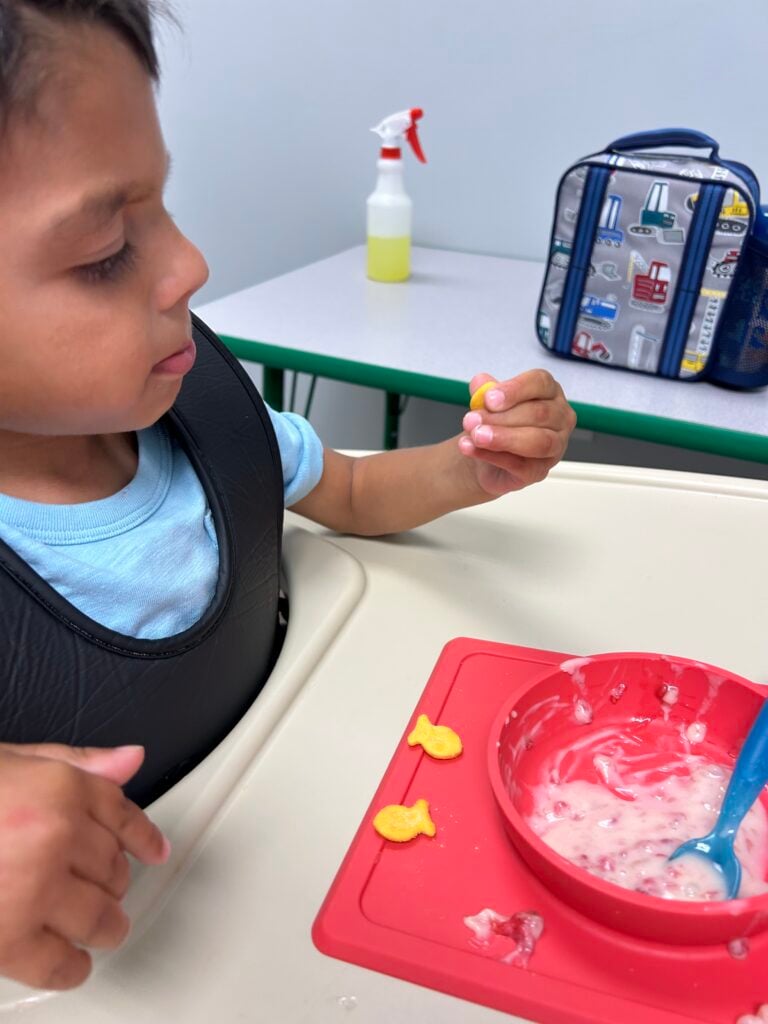
The tongue plays an important role in many everyday activities, from helping babies feed to allowing children to chew, swallow, and produce clear speech. When tongue movement is limited by a tongue-tie, these skills may take extra effort to develop.
Not every child experiences the same challenges. Some children have only mild speech or feeding difficulties, while others need additional support as communication demands increase or they transition to more complex foods. A child with a tongue-tie may experience speech challenges, feeding challenges, or a combination of both.
Speech Challenges Caused By Tongue-Ties
As children begin talking, restricted tongue movement may affect speech development in different ways. They may experience challenges with:
- Producing speech sounds that require the tongue to lift, such as “ta,” “da,” “na,” and “la”
- Speaking clearly enough to be understood by family members, teachers, and friends
- Moving the tongue smoothly and efficiently during speech
- Participating confidently in conversations and classroom activities
- Expressing thoughts and ideas without becoming frustrated
Feeding Challenges Caused By Tongue-Ties
From infancy through childhood, restricted tongue movement may make feeding more challenging for your child, making it harder for them to get the nutrition they need. They may experience challenges with:
- Latching during breastfeeding or bottle feeding
- Chewing and moving food around the mouth
- Managing different food textures
- Swallowing food comfortably and efficiently
- Finishing meals without becoming tired or frustrated
How Speech Therapy Helps Children with Tongue-Ties
At TOTS, our speech-language pathologists can help your child build the movement and coordination needed to speak clearly, feel understood, and eat comfortably. Whether your child benefits from therapy alone or is receiving therapy before or after a tongue-tie release, treatment is individualized to support their unique strengths, challenges, and goals.
Depending on your child’s needs, speech therapy may focus on:
- Supporting more effective breastfeeding or bottle feeding
- Improving tongue movement for clearer speech and more efficient eating
- Building the skills needed for speaking, chewing, and swallowing
- Developing the coordination needed to move the tongue more effectively during speech and mealtimes
- Supporting age-appropriate speech and feeding skills as your child grows
What Pediatric Therapy for Tongue-Ties May Look Like
Because every child experiences a tongue-tie differently, the therapists at TOTS tailor therapy to your child’s age, developmental stage, and unique goals. Sessions are engaging, play-based, and designed to build new skills through activities that feel natural and motivating.
Depending on whether your child is experiencing speech difficulties, feeding challenges, or both, therapy may include a combination of the following approaches:
- Working with babies during breastfeeding or bottle feeding to improve latch and feeding efficiency
- Playing games, reading books, and using pretend play to build new speech and tongue movement patterns
- Practicing speech sounds through fun activities that grow into words, phrases, and everyday conversation
- Building tongue coordination and control through simple movement exercises
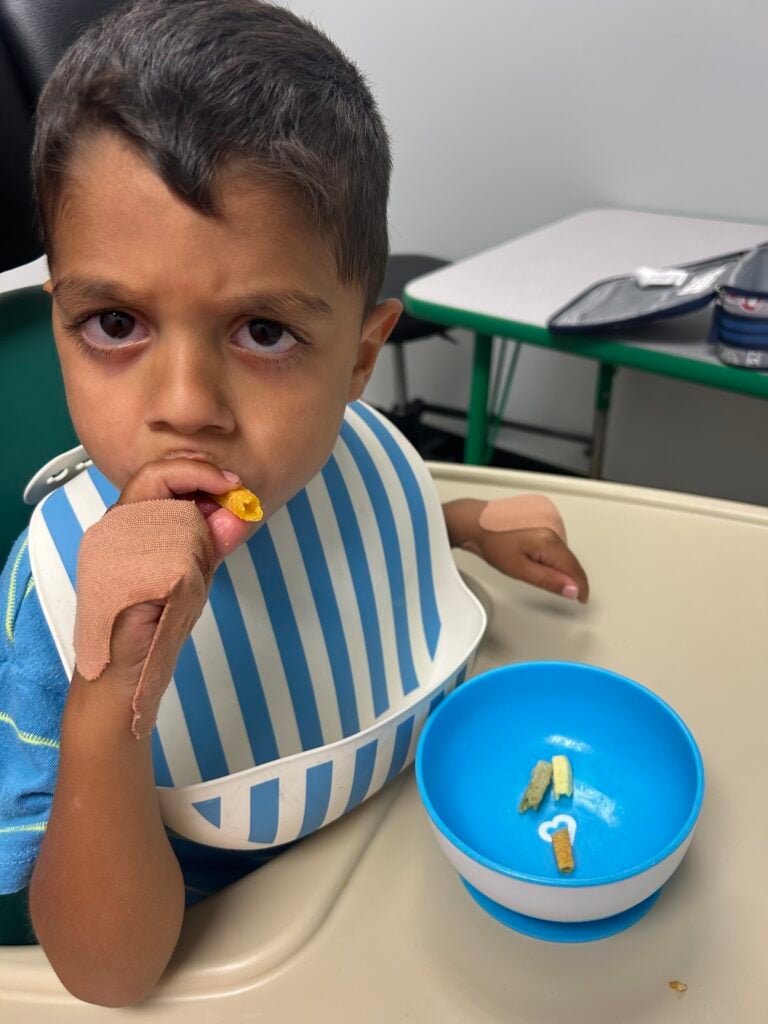
- Using age-appropriate foods to practice the tongue movements needed for chewing, swallowing, and handling different textures
- Coaching parents on simple strategies to keep progress going at home
Throughout therapy, we’ll work closely with your family, celebrating each success and adjusting your child’s treatment plan as their skills and confidence continue to grow.
When Occupational Therapy May Also Help with Feeding Challenges
While many feeding challenges caused by a tongue-tie can be addressed through speech therapy, some children benefit from occupational therapy when those difficulties begin to affect other aspects of mealtime. If ongoing challenges with chewing, swallowing, or managing foods make it harder for your child to develop self-feeding skills, participate comfortably during meals, or establish successful mealtime routines, occupational therapy may also be recommended.
At TOTS, our occupational therapists work closely with our speech-language pathologists to provide a more holistic approach to your child’s care. Together, they address both the oral mechanics of eating and the everyday skills that help your child participate more comfortably, confidently, and independently during meals.
Reach Out to Tender Ones Therapy Services Today
If you’re concerned that a tongue-tie may be affecting your child’s speech or feeding skills, the team at TOTS is here to help. Contact one of our Dacula, Gainesville, or Brookhaven, GA, locations today or fill out our online form to schedule an evaluation and learn how we can help your child feel heard, understood, and enjoy more comfortable and successful mealtimes.