

If you’ve been told your child has low muscle tone, or you’ve noticed that movement seems harder or more tiring for them, it’s normal to have questions. Many parents wonder what low muscle tone really means, how it might affect their child long-term, and whether physical therapy can help.
In this article, we’ll explain what low muscle tone is, how it can affect everyday activities, and how physical therapy can support your child’s growth. We’ll also give you fun, practical ways to encourage strength and stability at home.
What Is Low Muscle Tone?
Muscle tone refers to how much tension a muscle has when it is at rest. Children with low muscle tone tend to have muscles that feel softer or looser, which means their bodies have to work harder to maintain posture, balance, and control during movement.
It’s important to know that low muscle tone is not the same as muscle weakness. Many children with low muscle tone are strong, motivated, and capable—but their muscles don’t automatically provide as much stability as others might. Because of this, movements that look simple for other children can take more effort.
Physical therapy helps children build the strength and stability their bodies need to support movement, posture, and balance, even when muscle tone is naturally lower.
What Causes Low Muscle Tone?
Low muscle tone can occur on its own, or it can be associated with certain medical or developmental conditions. Some common causes include:
- Down syndrome
- Premature birth
- Genetic or neurological conditions
- Developmental delays
- Connective tissue differences
In many cases, there is no single clear cause of this condition. Even so, children with low muscle tone can make meaningful progress with the right support.
How Low Muscle Tone Can Affect Daily Activities
Low muscle tone can influence how a child moves, plays, and participates in everyday routines. Because their muscles have to work harder to support their body, they may tire out more quickly or move in ways that are less efficient.
Parents may notice things like:
- Slouching or leaning on furniture or people for support
- Difficulty sitting upright for long periods
- Challenges with balance or coordination
- Avoidance of physically demanding activities
- Needing frequent breaks during play
More Signs of Low Muscle Tone at Different Ages
Low muscle tone can show up in different ways as children grow. Some common signs to watch out for include:
In Infants and Toddlers
- Delayed rolling, sitting, crawling, or walking
- Difficulty holding their body upright during play
- Appearing “floppy” when picked up
- Limited endurance for tummy time or floor play
In Preschool-Age Children
- Trouble with stairs or playground equipment
- Frequent fatigue during active play
- Difficulty maintaining upright posture when sitting
- Seeming unsteady or cautious with movement
In School-Age Children
- Poor endurance during sports or physical education
- Slouching at tables or during seated activities
- Avoidance of active games like hopscotch or tag
- Difficulty keeping up with peers physically
How Physical Therapy Helps Children with Low Muscle Tone
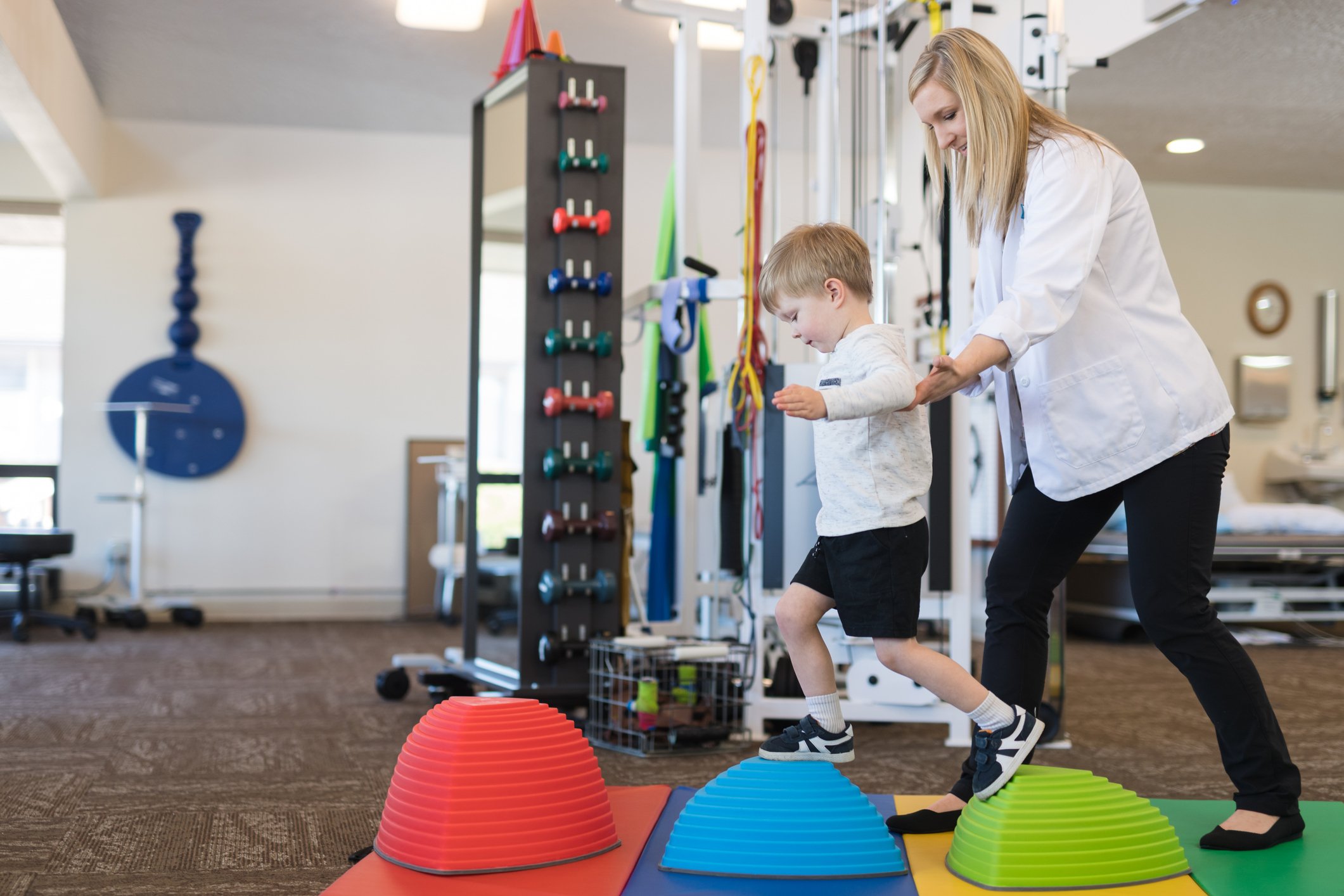
Physical therapy does not change muscle tone itself. Instead, it focuses on building strength, stability, and endurance around the tone a child has. By strengthening key muscle groups and improving their coordination, we can help your child move more efficiently and with less effort, even when muscle tone is low.
Physical therapy can help children with low muscle tone by:
- Building strength in the muscles that support posture and movement
- Improving balance and coordination
- Increasing endurance for daily activities and play
- Supporting confidence during movement
- Encouraging more efficient movement patterns
Our therapy sessions are always play-based and individualized to each child’s needs. Our expert physical therapists design activities that feel fun and motivating while gradually building each child’s skills over time. We also include families throughout the process so your child’s progress can continue outside of therapy sessions, as well.
Fun Ways to Support Strength and Stability at Home
Supporting your child’s strength at home doesn’t have to feel like work. There are simple, playful activities you can do with your child to encourage movement and help them build endurance naturally. Here are some of our favorite suggestions:
Floor Play and Supported Sitting
For babies, supervised floor play and tummy time help build strength in the neck, shoulders, arms, and core. You can place toys just out of reach, use mirrors, or get down on the floor face-to-face to encourage your baby to lift their head and push up through their arms.
Sitting with support, such as pillows or a caregiver nearby, also encourages postural control and balance while still allowing your baby to move, adjust, and explore comfortably.
Animal Walk Games
Crawling like a bear or walking like a crab helps strengthen the arms, legs, and core while encouraging full-body coordination. You can turn this into a game by pretending to visit different animals at the zoo or racing to a favorite toy. Keep these games short and playful, and allow breaks as needed so your child can gradually build strength and endurance without becoming overwhelmed.
“Statue” or Wall Games
Have your child stand against a wall or hold a pose while pretending to be a statue, superhero, or frozen character. You can count together, play music, or make it a guessing game to keep things fun. These activities help build postural strength and body awareness in a low-pressure way, especially for children who have difficulty maintaining upright positions for longer periods.
Bubble Popping Games
Blow bubbles and encourage your child to reach up, across, or slightly behind their body to pop them. You can vary where the bubbles float to encourage more reaching and posture changes. This activity builds strength, coordination, and body awareness while keeping play light and fun.
Playground Play
Climbing, swinging, and hanging at the playground naturally support strength, coordination, and endurance. Encourage your child to explore equipment at their own pace, whether that means climbing a few steps, holding onto bars, or swinging with assistance.
Taking breaks when needed will help prevent fatigue while still allowing your child to build their confidence and physical skills over time.
Reach Out to Tender Ones Therapy Services for Extra Support
If you’re unsure whether your child could benefit from physical therapy, a screening or evaluation can give you peace of mind. Tender Ones Therapy Services offers pediatric physical therapy at our clinics in Dacula, Gainesville, and Atlanta, GA. Give us a call to schedule an evaluation today, and let’s work together to support your child’s movement, confidence, and growth!