

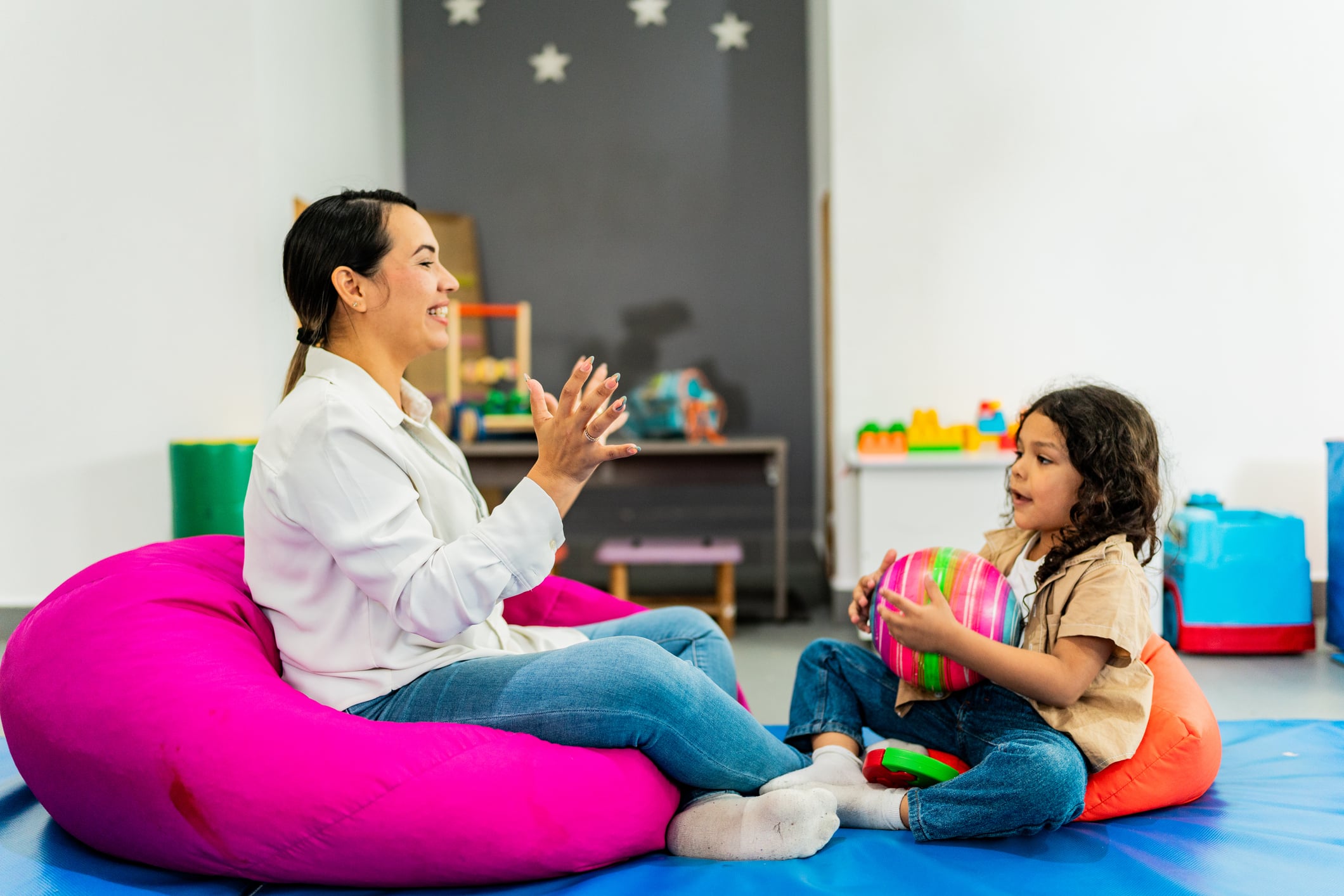
Many parents are surprised when their child is recommended for both speech therapy and occupational therapy at the same time. At first, it may seem like these therapies focus on completely different skills. However, many areas of child development are deeply connected, and challenges in one area can affect many parts of everyday life.
Because development is interconnected, children often benefit from support that addresses multiple skills together. Speech therapy and occupational therapy frequently work side by side to help children build confidence, independence, and success during daily activities. In this blog article, we’ll explain how.
The Difference Between Speech Therapy and Occupational Therapy
Although these therapies have different areas of focus, they often support many of the same developmental goals from different perspectives.
What Speech Therapy Addresses
Speech therapy focuses on communication and language development. Speech therapists help children strengthen skills related to:
- Expressing thoughts and needs
- Understanding language
- Producing speech sounds clearly
- Social communication
- Feeding and swallowing skills
What Occupational Therapy Addresses
Occupational therapy focuses on the skills children use to participate in everyday life. Occupational therapists help children develop:
- Fine motor skills
- Sensory processing skills
- Emotional regulation
- Attention and focus
- Self-care skills
- Play and social participation
How Speech and Occupational Therapy Work Together
Children rarely experience challenges in only one isolated area of development. Many everyday activities require communication, motor coordination, attention, sensory processing, and emotional regulation all working together at the same time.
When speech therapists and occupational therapists collaborate, we can provide more comprehensive support that addresses the full picture of your child’s development. Here are some of the key ways that we can do that:
Supporting Social Skills and Communication Together
Social interactions involve much more than talking. Children also need to:
- Read facial expressions and body language
- Manage emotions during conversations
- Take turns speaking and listening
- Maintain attention during interactions
- Understand personal space and boundaries
A speech therapist may help your child develop conversation skills and expressive language, while an occupational therapist may help with emotional regulation, sensory processing, and social participation.
Together, these skills help children feel more comfortable building friendships and participating in group activities.
Helping Children with Feeding Challenges
Feeding difficulties often involve multiple developmental systems working together. Some children struggle with chewing and swallowing, while others may feel overwhelmed by certain textures, smells, or sensory experiences during meals.
Speech therapists can help with oral motor skills like chewing and swallowing coordination. Occupational therapists can help with:
- Sensory sensitivities related to food
- Mealtime routines and participation
- Postural stability during meals
By working together, therapists can help create a more comfortable and successful mealtime experience for your child and family.
Building Attention, Listening, and Thinking Skills
Children use attention, memory, problem solving, and planning skills throughout the day. These cognitive (thinking) skills affect learning, communication, routines, and social interactions.
A child who struggles with attention may have difficulty:
- Following directions
- Participating in conversations
- Completing tasks
- Understanding information
- Staying engaged during learning activities
Speech therapists may support language processing, listening comprehension, and communication strategies, while occupational therapists help strengthen attention, regulation, organization, and executive functioning skills.
Working together allows our therapists to support both communication and the underlying skills that help children participate successfully in everyday activities.
Supporting Emotional Regulation and Confidence
Children who experience communication or developmental challenges may become frustrated when tasks feel difficult or when they struggle to express themselves clearly. Over time, this frustration can affect their confidence, behavior, and participation in social settings.
Speech therapy and occupational therapy both help children build confidence through supportive, child-centered activities that encourage success in small, meaningful steps.
As children develop stronger communication, regulation, and participation skills, many families notice improvements not only in therapy goals, but also in everyday interactions at home, school, and in the community.
What Therapy May Look Like for Your Child
Every child’s therapy plan is personalized based on their strengths and needs. Some children participate in speech therapy and occupational therapy separately, while others may benefit from coordinated sessions that target shared goals.
Therapy activities are often play-based and designed to feel engaging and supportive. Sessions may include:
- Games that encourage communication and turn-taking
- Sensory activities that support regulation and focus
- Feeding activities
- Problem-solving tasks
- Social interaction activities
Our therapists also work closely with families to provide strategies that can be used at home to continue supporting development outside the clinic.
When to Reach Out for Extra Support
If your child struggles with communication, attention, feeding, sensory processing, social participation, or daily routines, a combination of speech therapy and occupational therapy may provide meaningful support.
At Tender Ones Therapy Services, our speech therapists and occupational therapists work together to help children build the skills they need to thrive at home, in school, and in everyday life. Contact our team today to schedule an evaluation and learn how we can support your child’s development.