

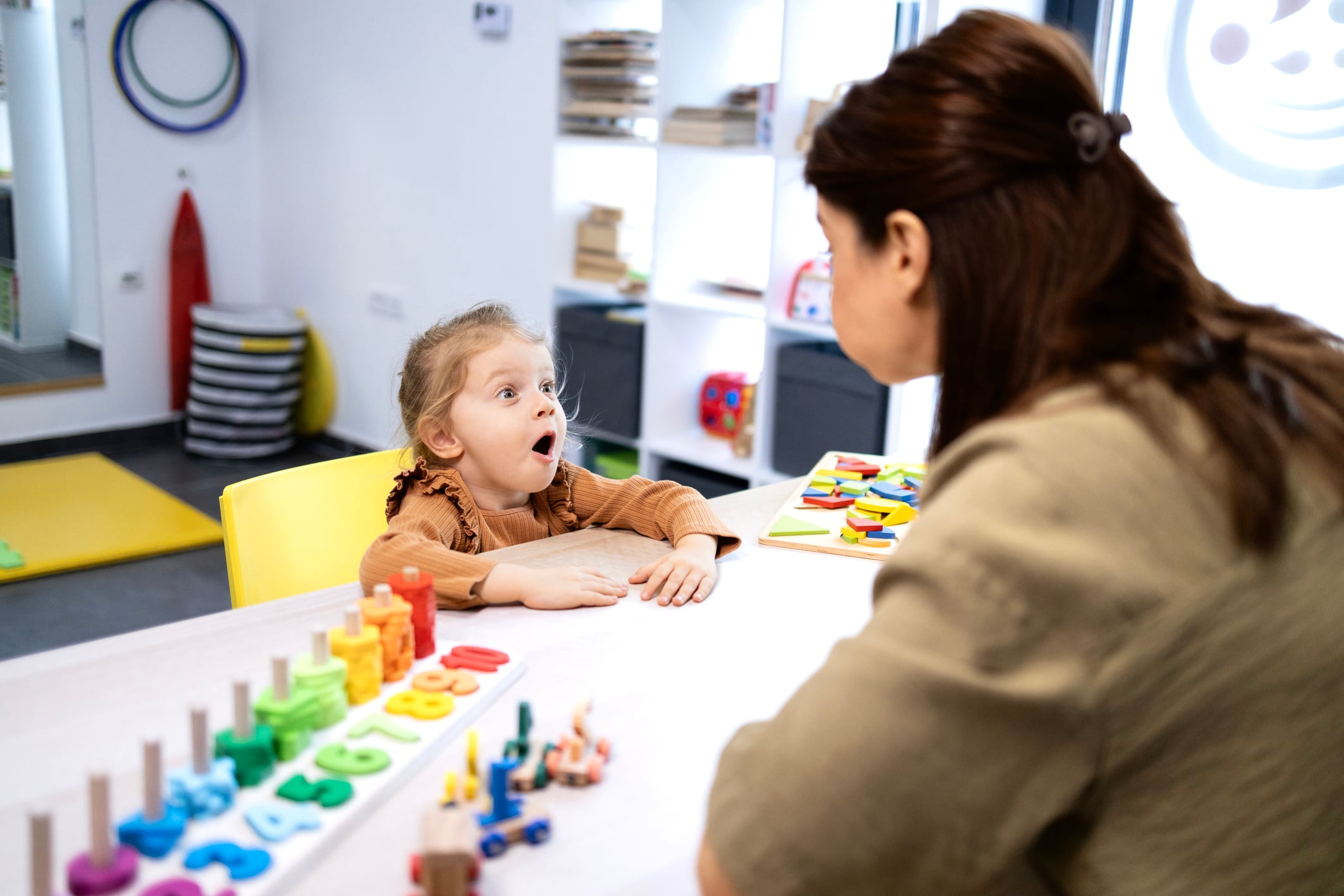
It can be confusing when your child seems to understand everything you say but struggles to express themselves with words. They may follow directions, point to what they want, or respond appropriately to questions without being able to say much themselves. As a parent, you might wonder if this is something they will outgrow or if they need extra support.
The good news is that understanding language and speaking are two different skills. Some children develop one before the other, and with the right support, many children make meaningful progress in their communication.
Understanding the Difference Between Understanding Language and Speaking
Communication is made up of several different skills. Two of the most important are receptive language and expressive language.
- Receptive language is your child’s ability to understand words, directions, and conversations. For example, a child with strong receptive language skills may be able to follow simple directions or point to familiar objects when you name them.
- Expressive language is how your child communicates their own thoughts, wants, and ideas. This is not limited only to speaking. It includes using words, gestures, signs, facial expressions, or sentences to communicate with others.
A child can have strong receptive language while still finding expressive language difficult. In other words, they know what you are saying but have trouble getting their own words out.
Why Some Children Understand More Than They Can Say
There are many reasons why a child may understand language better than they can express it. Some children simply need more time and practice developing their communication skills. Others may have an underlying condition or developmental difference that affects how they learn to speak.
These challenges can be related to developmental delays, conditions like childhood apraxia of speech (CAS), hearing differences, autism spectrum disorder, or other conditions that affect communication. In some cases, there may not be one clear cause at all.
Because every child develops differently, a speech-language evaluation is the best way to understand what’s contributing to your child’s communication challenges and determine what support may be most helpful.
Signs That Your Child May Be Struggling with Expressive Language
Every child develops communication skills at their own pace, but there are some signs that indicate your child could benefit from additional support. You might notice that your child:
- Understands simple directions but rarely responds with words
- Uses fewer words than other children their age
- Has difficulty combining words into short phrases or sentences
- Relies on pointing, gestures, or sounds instead of speaking
- Becomes frustrated when trying to communicate
- Knows what they want to say but has trouble getting the words out
- Has difficulty answering questions, even when they seem to understand them
- Lets siblings, parents, or others speak for them
How Speech Therapy Can Help Your Child Express Themselves More Easily
If your child understands language well but has difficulty expressing themselves, a speech-language pathologist (SLP) can evaluate their communication skills and identify where they may need support.
Speech therapy is designed to meet each child where they are. Therapy may focus on expanding vocabulary, combining words into phrases, improving speech clarity, strengthening expressive language skills, or finding alternative ways to communicate while verbal language develops.
Sessions at Tender Ones are play-based, engaging, and personalized to your child’s unique strengths and needs. Our therapists also work closely with families to provide practical strategies you can use at home to encourage communication between visits.
How You Can Encourage Communication at Home
Everyday interactions provide wonderful opportunities to build expressive language skills.
One simple strategy is to give your child extra time to respond after asking a question. Some children need a few additional seconds to process what they want to say before answering.
You can also model slightly longer phrases when your child communicates. For example, if your child says, “Cookie,” you might respond, “You want a cookie,” or “I want a cookie, please.” This helps demonstrate how words fit together naturally without putting pressure on your child to repeat them.
Reading together, singing songs, and talking throughout daily routines also expose your child to new vocabulary in fun ways. Rather than quizzing your child, focus on making communication enjoyable through conversations during meals, playtime, bath time, or while running errands.
Most importantly, celebrate every attempt to communicate, whether your child uses words, gestures, or sounds. Positive encouragement helps build confidence and keeps communication fun.
When to Reach Out for Support
If your child consistently understands what others are saying but has difficulty expressing themselves with words, it is okay to ask questions. Early support can help children build communication skills, reduce frustration, and gain confidence in expressing themselves.
At Tender Ones Therapy Services, our pediatric speech therapists help children strengthen the communication skills they need to thrive at home, at school, and in everyday life. If you have concerns about your child’s speech or language development, contact our team today to schedule an evaluation and learn how we can support your child’s growth.