

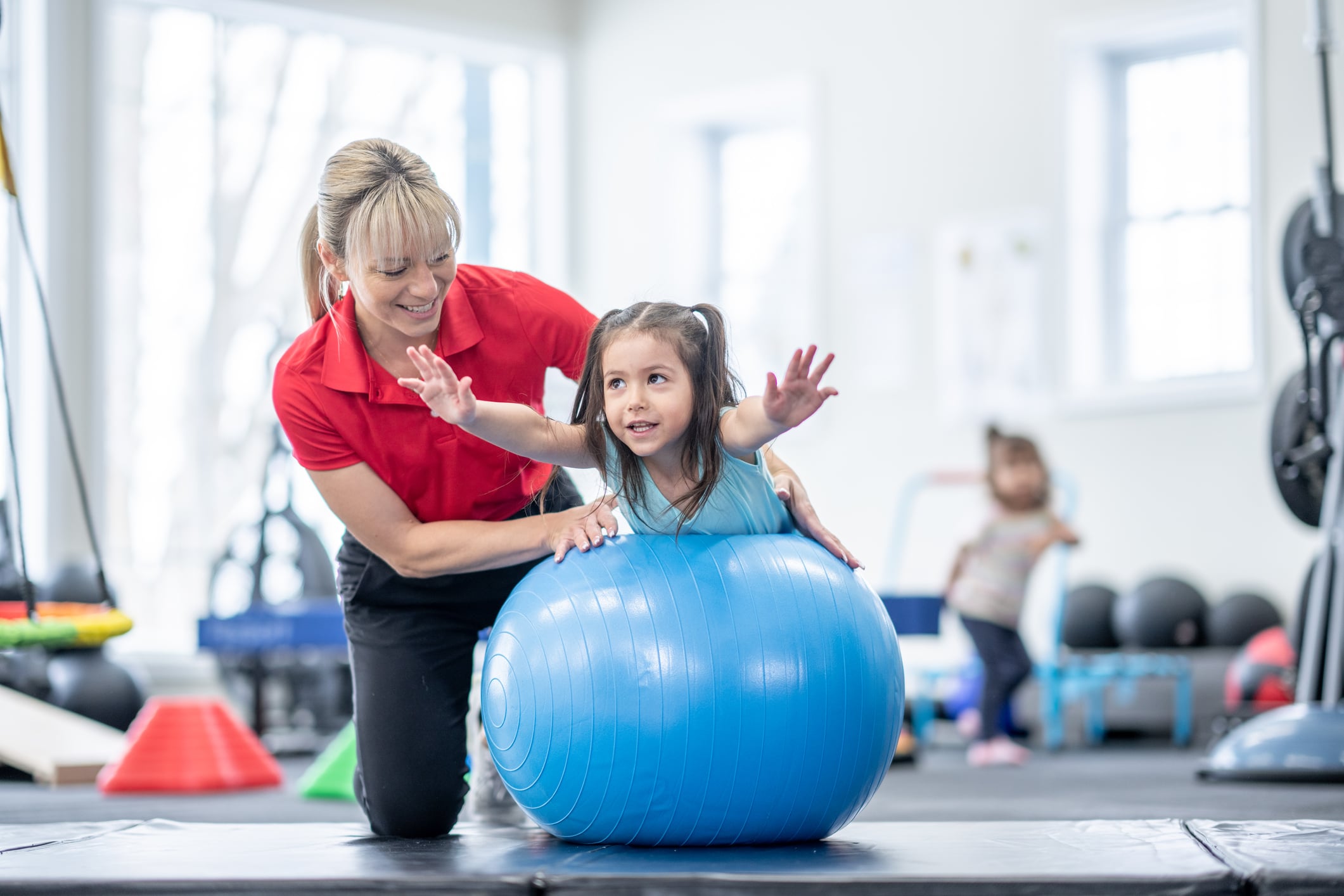
When you hear the words “core strength,” you probably think about sit-ups, exercise, or building strong abdominal muscles. But your child’s core does much more than help them exercise. Core strength provides a stable foundation for many of the movements and activities your child completes throughout the day.
Children rely on their core muscles constantly, from sitting upright at school and climbing playground equipment to getting dressed and even using their hands for everyday tasks. When these muscles are weak or tire easily, everyday activities may require much more effort.
What Is Core Strength?
Your child’s core includes a group of muscles around the abdomen, back, pelvis, and hips that work together to support and stabilize the body.
These muscles help your child maintain good posture and keep their body steady while their arms and legs move. For example, when your child reaches for a toy, throws a ball, writes at a desk, or climbs onto a chair, their core helps provide the stability they need to complete the movement with control.
Think of the core as the body’s foundation. When that foundation is strong and stable, your child can use the rest of their body more efficiently.
How Core Strength Supports Your Child’s Development
Core strength supports many areas of childhood development, including gross motor skills, fine motor skills, balance, coordination, and independence with everyday activities.
Children use their core muscles when they:
- Sit upright at a desk or table
- Run, jump, climb, and play
- Maintain their balance
- Walk up and down stairs
- Ride a bicycle or scooter
- Get dressed and put on shoes
- Reach for and carry objects
- Use their hands for writing, drawing, and crafts
Because core strength supports so many other movements, weakness in this area can sometimes affect activities that may not seem related to the core at all.
Core Strength Can Affect Fine Motor Skills, Too
It may seem surprising that the muscles in your child’s trunk could affect activities involving their hands, but the two are closely connected.
Imagine trying to write neatly while sitting on an unstable chair. You would have to spend extra energy keeping yourself steady, which would make it harder to concentrate on controlling your pencil.
A similar thing can happen when a child has difficulty maintaining stability through their core. Sitting upright at a table may require extra effort, which leaves less energy for writing, cutting with scissors, eating with utensils, or completing other tasks with their hands.
A stable core gives the shoulders, arms, and hands a strong base from which to work. This is one reason our therapists often look beyond the hands themselves when a child struggles with certain fine motor activities.
Fun Ways to Build Core Strength at Home
Children don’t need a traditional workout routine to strengthen their core. In fact, some of the best strengthening activities happen naturally through play. You could try simple, fun activities like:
- Crawling through tunnels or homemade obstacle courses
- Climbing at the playground
- Walking like animals, such as bear walks or crab walks
- Playing in a hands-and-knees position
- Dancing to favorite songs
- Swimming
- Playing catch while kneeling
- Lying on the stomach while reading, coloring, or playing with toys
Active outdoor play also gives children great opportunities to strengthen their supportive core muscles. Make sure to keep activities fun and appropriate for your child’s age and skill level. By providing these regular opportunities for movement and play, you can help your child gradually build strength without making exercise feel like a chore.
How Pediatric Therapy Can Help
If your child has difficulty with core strength, posture, balance, or everyday motor activities, pediatric therapy can help determine what may be contributing to those challenges.
Our therapists can evaluate your child’s strength, posture, balance, coordination, and overall motor skills. Therapy may then use fun, play-based activities to help strengthen your child’s core while working on the specific skills they need for everyday life.
We can also show families activities that can easily be incorporated into play and daily routines at home.
When to Reach Out for Support
Core strength is an important foundation for movement, posture, and independence, but every child develops these skills differently. If your child frequently struggles to sit upright, tires easily during physical activities, or has difficulty with daily tasks, we’re here to help.
At Tender Ones Therapy Services, our pediatric therapists help children develop the strength and motor skills they need to participate more confidently at home, at school, and during play. Contact our team today to schedule an evaluation and learn how we can support your child’s development.