

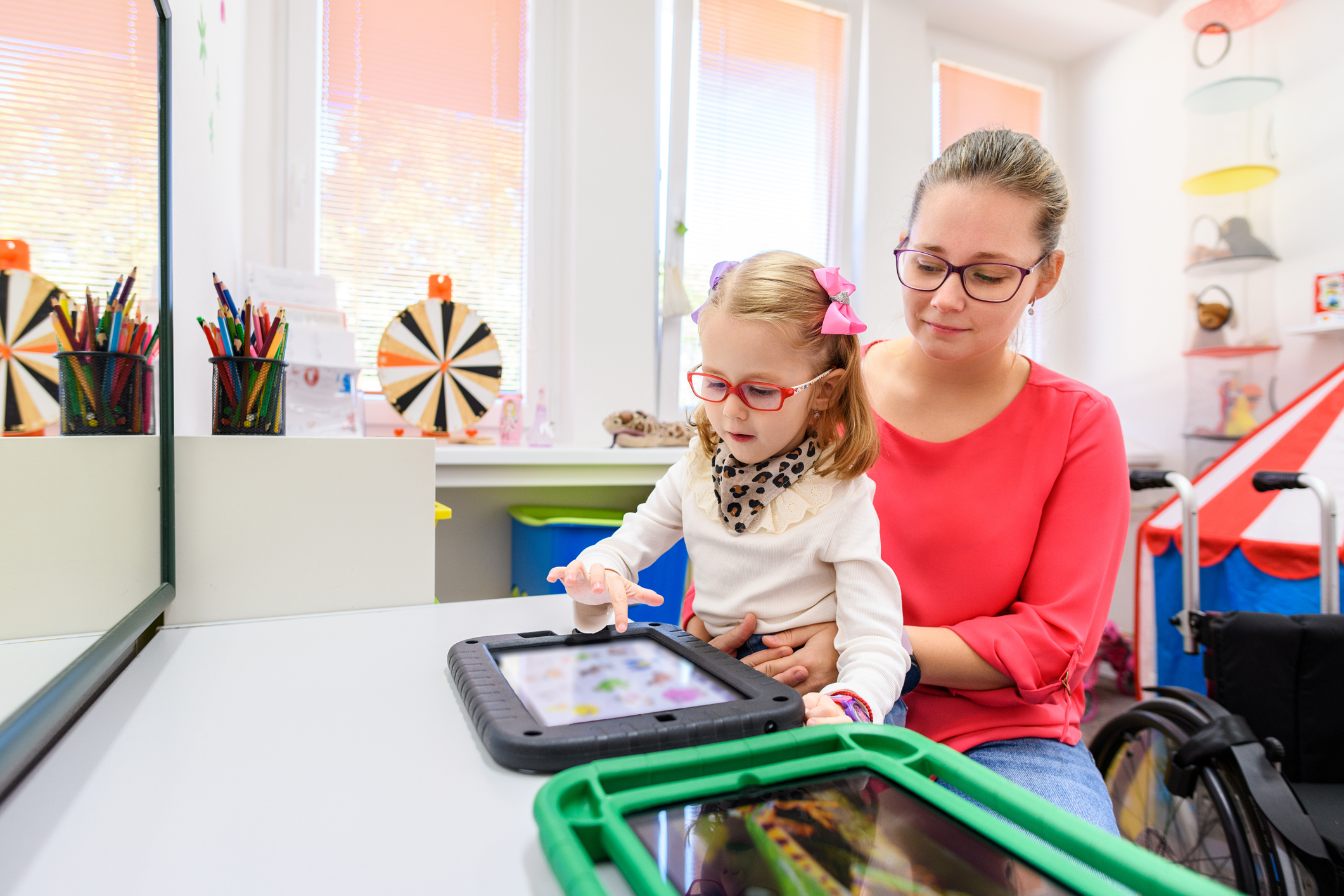
Every child deserves to feel heard, but for some, spoken language does not come easily. If your child relies on pointing and gestures to express their needs, especially when you know they understand far more than they can say, it can feel frustrating for both you and your child.
Communication tools like pictures and specialized devices can help reduce your child’s frustration. They give your child the voice and confidence to express themselves clearly and connect more fully with the world around them.
What Are Communication Devices?
Communication devices, often referred to as augmentative and alternative communication or AAC, are tools that help your child express themselves when spoken language is limited or difficult.
Some children use these tools alongside spoken language, while others rely on them as their primary way to communicate. Using these tools takes the pressure off your child to produce speech sounds, which often makes communication easier and less frustrating. The goal is not to replace speech, but to give your child a reliable way to share their thoughts and participate in everyday interactions.
Why Some Children Benefit from Communication Devices
While every child’s journey is unique, your child may benefit from a communication device if they are:
- Struggling to produce speech sounds clearly enough to be understood
- Having difficulty coordinating the mouth movements needed for speech
- Dealing with language development challenges that make it hard to organize and express thoughts
- Having difficulty with back-and-forth conversation or responding to others
- Managing conditions like autism, childhood apraxia of speech (a speech difficulty related to the brain), cerebral palsy, or developmental delays that impact their ability to use spoken language
Types of Communication Devices and Supports
Communication supports fall into two main categories:
- Low-tech options, such as picture boards, communication books, and visual choice boards, that use photos or symbols to help your child share ideas without the need for electronics
- High-tech options, such as tablets with specialized apps or dedicated speech-generating devices, that allow your child to select images or words that produce spoken output
Many children use a combination of these tools throughout the day. The best approach is one that feels comfortable for your child and helps them communicate more easily wherever they are.
How Communication Devices Help Your Child in Everyday Life
When your child has a reliable way to communicate, it can make a meaningful difference in their daily life. They may be able to:
- Express their needs more clearly
- Participate more easily in routines at home and school
- Engage more comfortably with family members and peers
- Make choices and share preferences
- Feel more confident being understood
When your child can share what they need, they do not just get the snack or toy they asked for. They also experience the relief and joy of being heard.
As communication becomes easier, your child can take a more active role in expressing themselves and participating in daily interactions as they connect with others.
How Communication Devices Use Pictures to Support Communication
Many communication devices are built around pictures, symbols, and visual choices. In some cases, the device will say the word out loud when a picture is selected. These tools give your child a clear, reliable way to share their thoughts and needs.
For example, your child might be:
- Requesting food or items by tapping a picture of a snack when they are hungry
- Making decisions by choosing between images to express a preference
- Initiating activities by selecting a picture that represents playing, going outside, or starting a new routine
- Expressing more complex thoughts by using a screen or board to show what they are thinking about
This connection between visual and spoken language makes it easier for your child to link meaning to words, building the consistency they need to feel confident and understood in every interaction.
How Pictures Alone Can Help Your Child Communicate
Pictures can be a powerful way for your child to communicate, even without a device. Because many children naturally respond to visual information, pictures provide an accessible, low-pressure way to share ideas.
Through pictures, your child can:
- Request items by pointing to a picture when they want a drink or a specific toy
- Make choices by selecting between two options to express a preference
- Follow daily routines using a visual schedule, like the steps for getting ready for bed
- Use a picture board to share their thoughts during playtime or meals
By removing the challenge of speaking, pictures make communication more approachable. This creates opportunities to connect, build trust, and support your child’s growing confidence.
How Speech Therapy Can Help Your Child Find the Right Communication Device
A speech therapist can help determine the best communication approach for your child. This begins with an evaluation to understand your child’s strengths, needs, and current communication style.
From there, the therapist helps select tools and strategies that fit naturally into your child’s daily life. This may include introducing pictures, helping your child learn how to use a communication device, and building skills step by step.
Therapy sessions are designed to feel engaging and supportive while helping your child learn how to use these tools to express their needs, share ideas, and participate in everyday interactions. The therapist will also guide you on how to use these tools at home so your child can continue building skills outside the clinic.
Reach Out to Tender Ones Therapy for Support
If you would like to learn more about how communication devices can help your child, and you are in the Dacula, Gainesville, or Atlanta, GA, area, Tender Ones Therapy Services can help. Call (770) 904-6009 or fill out our online form to schedule an evaluation. Our team is here to help your child bridge the gap between their thoughts and the world, giving them the opportunity to be heard, understood, and truly connected to those around them.